Třešť is the birthplace of Mr Tau, a holiday home for Franz Kafka and the place where nativity scenes became a tradition and legends were born. And I love a legend.
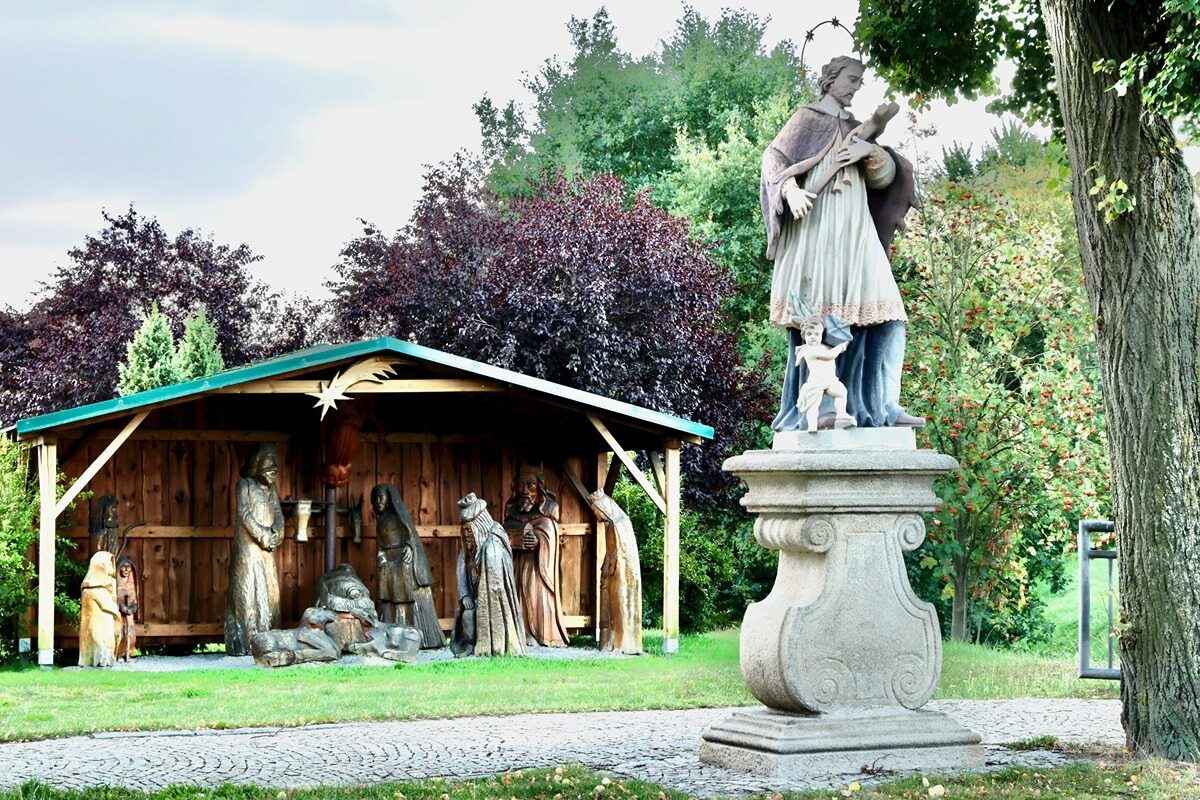
In a time when the forests of Vysočina were deep and dark a knight was travelling through them in search of a site to build a new settlement. Lost and tired he stopped to rest by a spring under an oak tree. As sleep overcame him, he had a dream. A beautiful fairy appeared and scattered tiny houses around her from a basket she was carrying. The knight took this dream as a sign and built his new village right there – using wood from the oak tree to build the first house. And he called this place Třešť (from třeštění, a fanciful vision). Whatever its true origin Třešť has much to captivate its visitors. Crossing the bridge into the centre of town a large, carved wooden nativity scene is a taste of what lies beyond.
Exposition of Nativity Scenes in Třešť
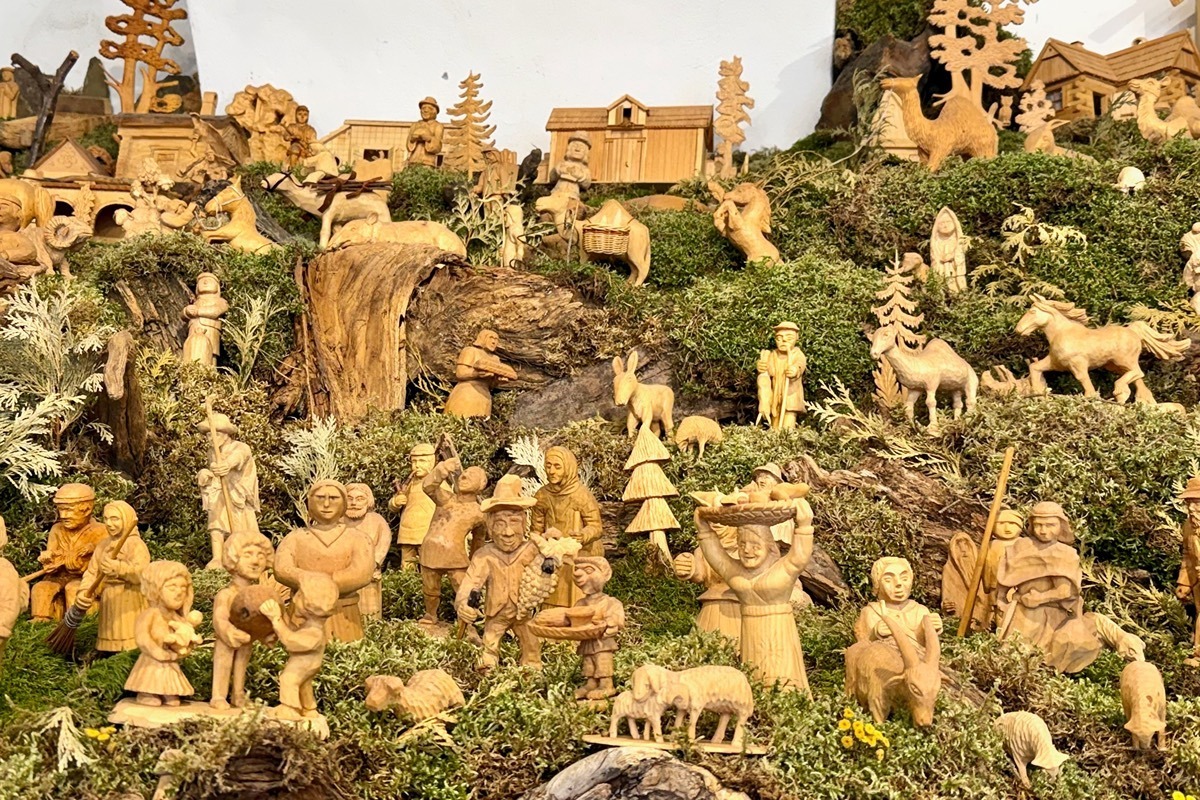
Schumpeter’s House, once the grand residence J. A. Schumpeter, a renowned economist, now houses the Tourist Information Centre. In the same building there is a branch of the Vysočina Museum and the Nativity Scenes Exposition. The production of nativity scenes in Třešť is a tradition of more than two hundred years passing down through generations of the town’s inhabitants. Saint Francis of Assisi is credited with the concept of the nativity scene when, during the early thirteenth century he organised the first live re-enactment of the birth of Jesus in Italy. His aim was to use a living tableau to bring the story of Christ’s birth to a largely illiterate community. This humble beginning inspired a movement that was to spread across Europe. Today, nearly every home in Třešť boasts a nativity scene. The basic components of these nativity scenes include the crib of Baby Jesus at the centre surrounded by a landscape encapsulating a city, farmsteads or chalets and decorated with natural materials such as moss. Over the Christmas period the local people will invite visitors into their homes to admire their nativity scenes.
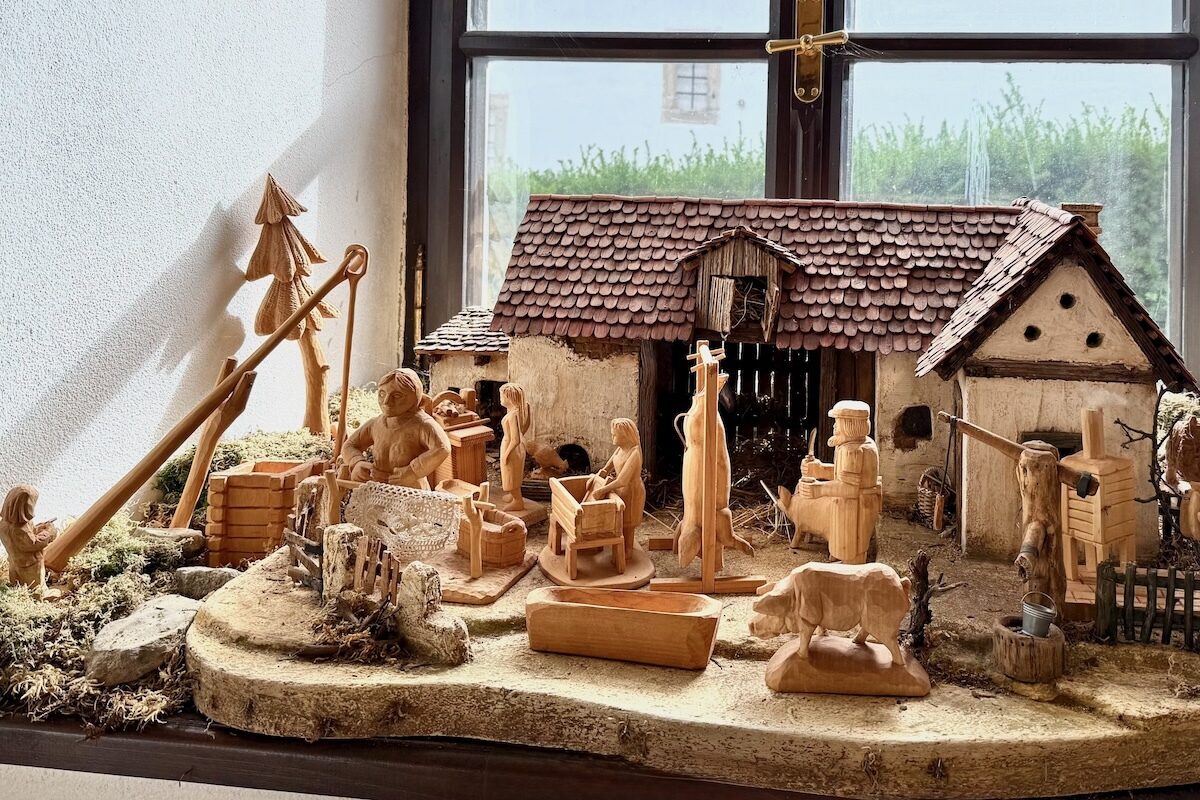
The exposition in Schumpeter’s House is permanent and features nativity scenes made from different material. Three are made from paper, the material that was used originally, one is made from wax and one from ceramic. The rest are made from wood; linden wood is most commonly used. The largest scene, known as Brožek’s nativity scene, fills an entire room. This scene has figures added every year and the current count is 1586. Every year, during the wood carving festival, ‘Dřevořezání’, in Třešť more figures are added. The exposition is closed so this extraordinary exhibit can be taken apart and cleaned. Fresh lichen is added and the figures are put back, not necessarily in the same place. Close to Schumpeter’s house is the old synagogue which now houses an exhibition about Franz Kafka and his family.

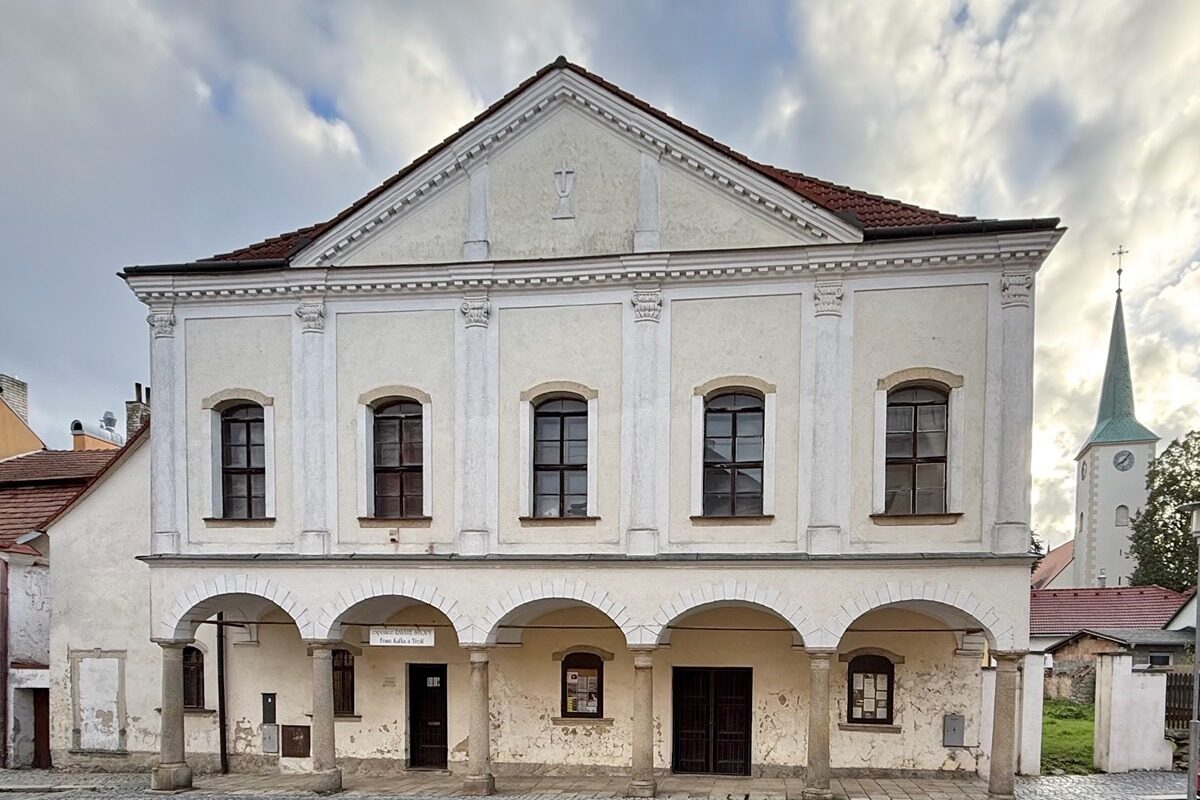
The Old Synagogue in Třešť
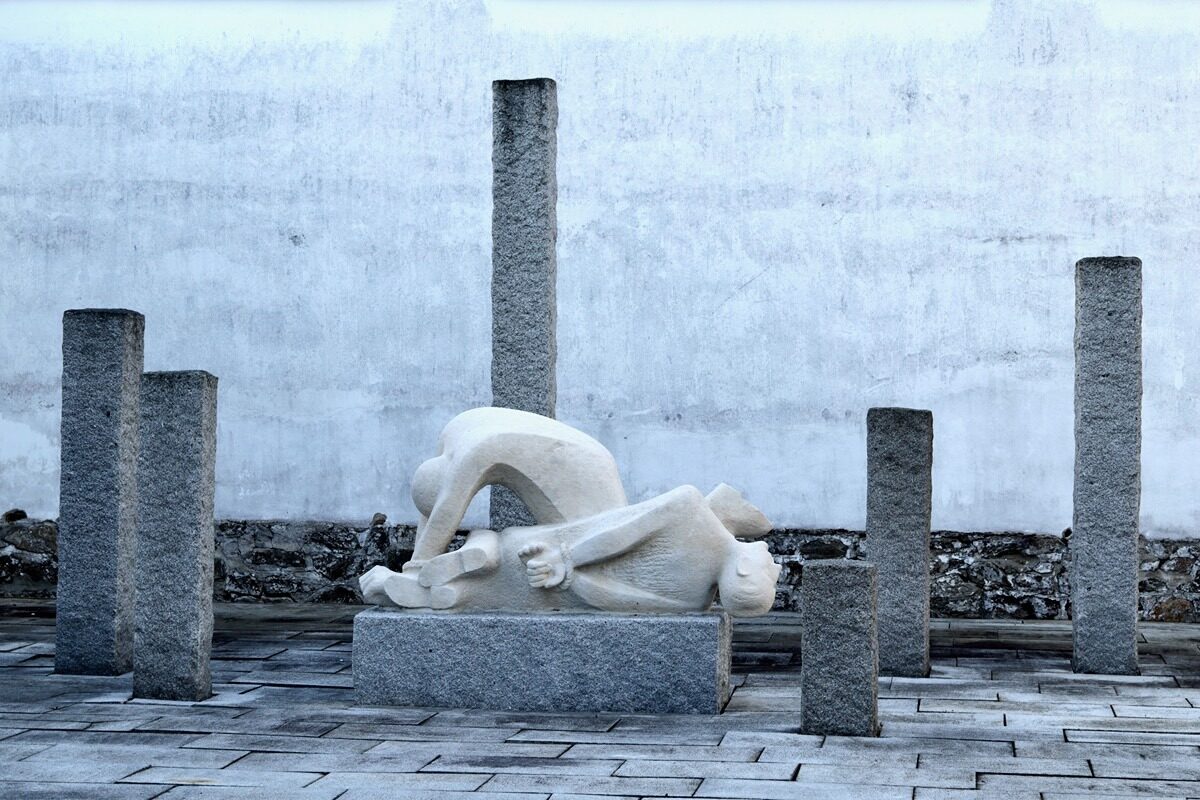
Sadly, the original seventeenth century Baroque synagogue was destroyed by fire in 1824. But it was rebuilt that same year only to suffer more damage during a fire in 1920. It has since been rebuilt in a style that makes this building unique. In the past the building has been used to store vegetables and theatre sets. It was bought by the current owners, the Czechoslovak Hussite Church in the 1950s. It stands as a memorial to all the Jews who were deported from Třešt' to concentration camps in 1942. Those who survived never returned here. There is also a memorial to these victims of the Holocaust in a former prison yard behind Třešt' Town Hall.
The exhibition in the synagogue recalls the days when Franz Kafka, the Prague-born German-language writer spent his holidays in Třešt' between 1900 and 1907. He stayed with his uncle Siegfried Löwy his mother’s youngest brother. Dr Löwy was a doctor in Třešt' for many years and it has been suggested that he was the inspiration for Kafka's short story “A Country Doctor”. During his visits to Třešt' is known that Kafka would visit the large park surrounding the impressive Třešť Chateau. Could this have inspired “The Castle” by Kafka?
Třešť Chateau in Třešť
Třešť Chateau is set back from the main road leading into the centre of Třešť. Fronted by statue topped pillars the driveway to the main entrance divides a large lawn and encircles a bubbling fountain. The chateau was built on the site of a sixteenth century fortress. It has been owned by the Czech Academy of Sciences and operates as a hotel. Recent renovations to the chateau have introduced several features that commemorate Franz Kafka. These include the incorporation of his drawings and writings in the interior design and the creation of the Franz Kafka Courtyard. The latter displays information about the writer as well as offering a pleasant outside dining space. Another famous, but very different character associated with Třešť is Mr Tau.

Mr Tau from Třešť
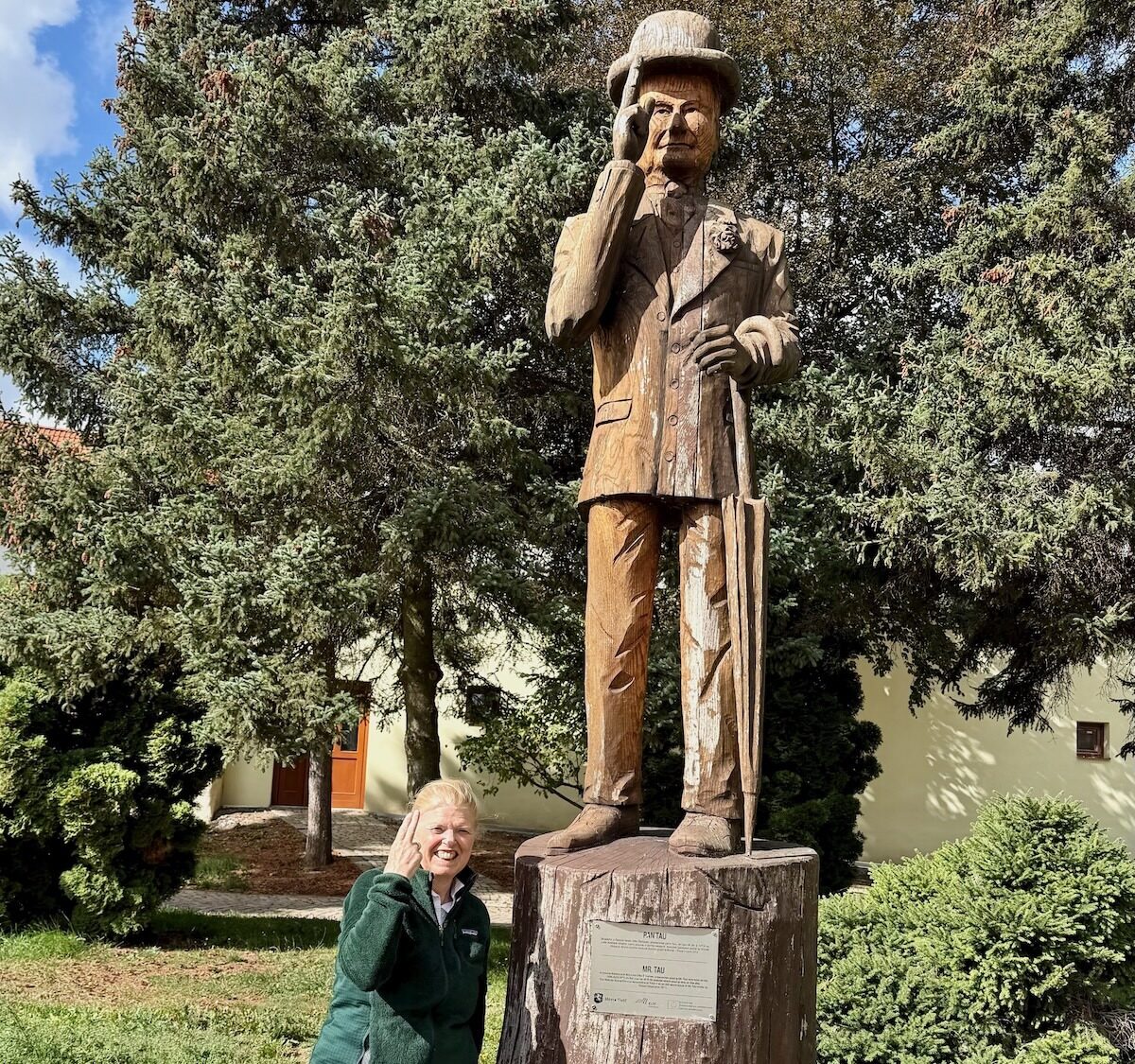
Set back from the bus station in Třešť is a wooden statue of the nationally popular fairy tale film character Mr Tau. The actor Otto Šimánek who played Mr Tau was born here. His most famous role was as the leading role of Pan Tau series in over thirty television episodes and three films. He did play many other roles, but it was Mr Tau that one hearts and is widely celebrated in Czechia and beyond. Certainly, a cherished memory of my visit to Třešť is a hilarious attempt to replicate Mr Tau’s signature pose. Close by is the main square of the town, T G Masaryk Square, named after the first President of Czechoslovakia.
T G Masaryk Square and the Sundial in Třešť
T G Masaryk Square features the old school building at its head. This historic three-storey building was completed in two stages between 1890 and 1901. It served as the town’s school until the early part of the twenty-first century when the construction of new facilities led to its closure. It was acquired by the local council but lay empty for ten years before funding was acquired to renovate the building to its former glory. The building is now home to the town’s elementary art school and hosts a variety of attractions including a collection of Czech Nativity Scenes and a café.
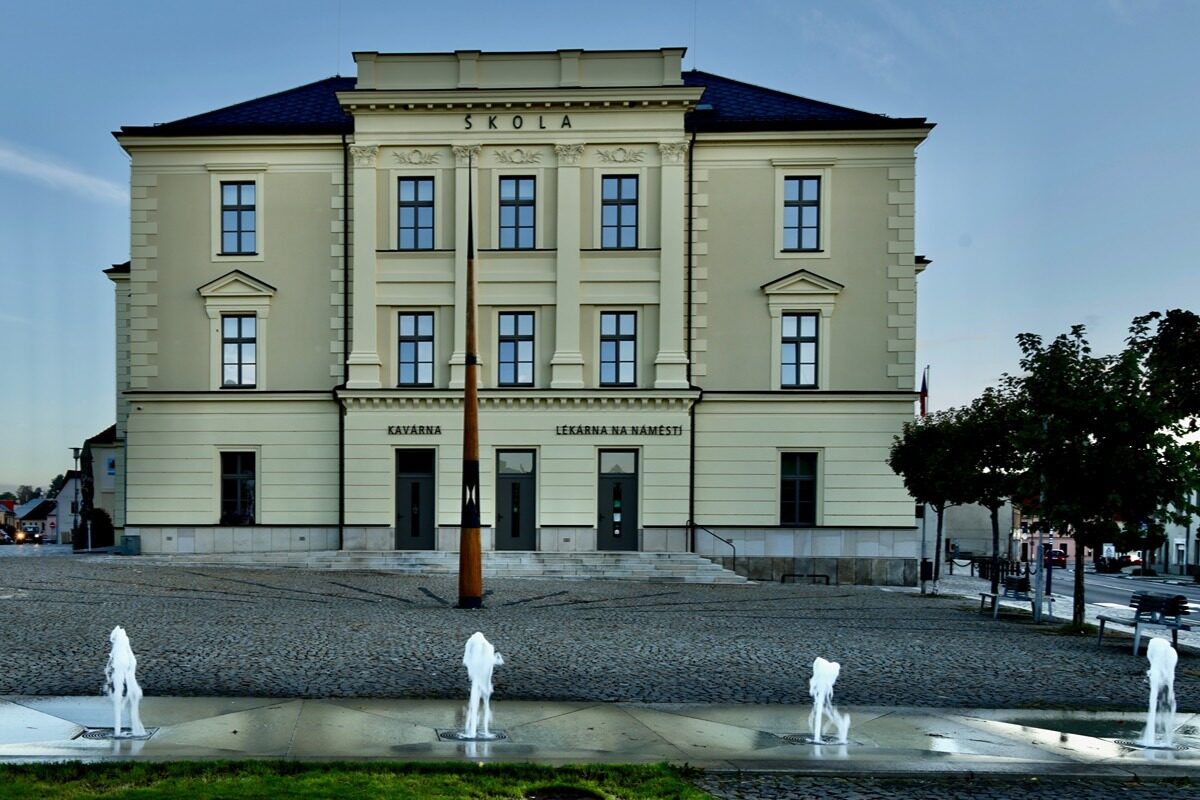
The square also features a tall metal spike. I am sure other visitors like me have puzzled over the purpose of this installation. It becomes clear if viewed from the school side – it is a giant sun dial. Installed in 2003 it is the second largest sundial in the Czech Republic. Extensive re-construction of the square was required to embed the thirteen time markers (to allow the shift relating to daylight saving time). This new design embodies the theme “Man and Time” and all the elements are significant. The four stages of man: birth, youth, old age and death are represented by four maple trees. Four fountains represent the four seasons of the year.
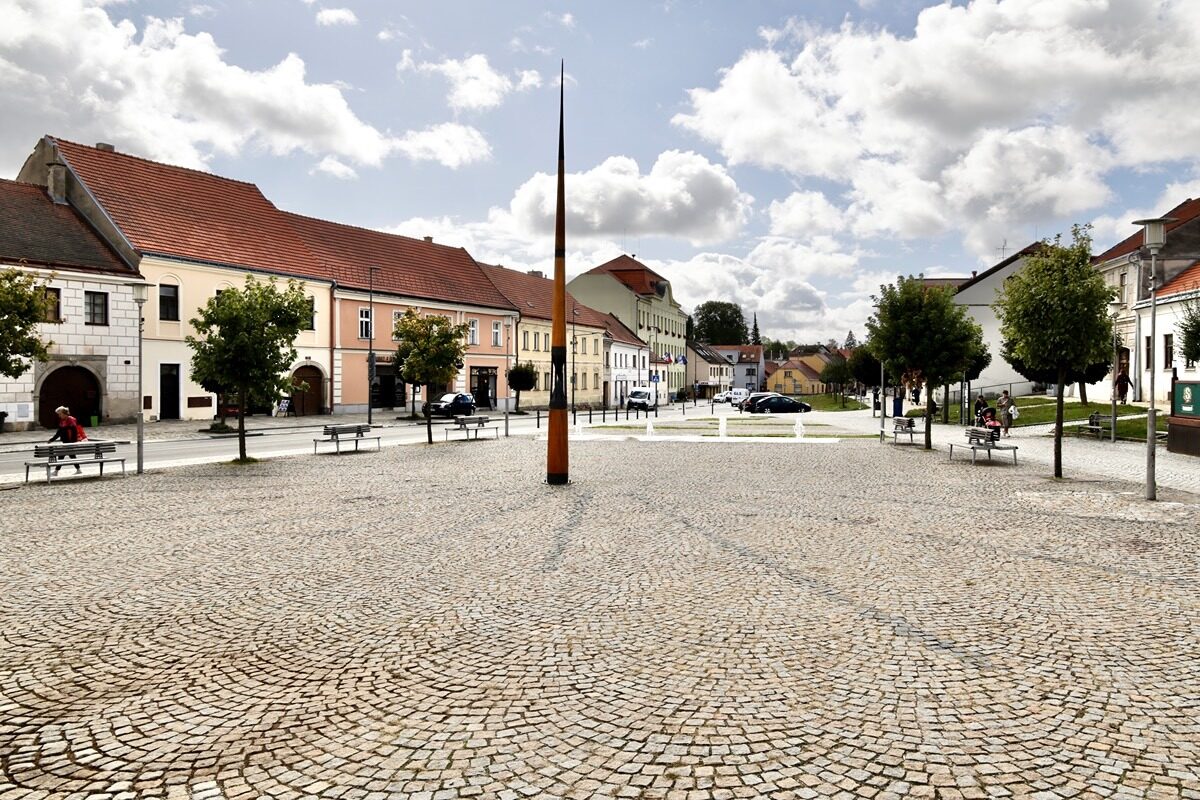
Sitting in the square reflecting on the sights I had seen was a very pleasant end to my visit to Třešť in Vysocina, a region in the Czech republic aka Czechia.

Valery Collins is the Experienced Traveller.
An excellent raconteur, Valery has been writing about her experiences on the road since she started travelling 30 years ago. After publishing four books she turned to online travel writing.